
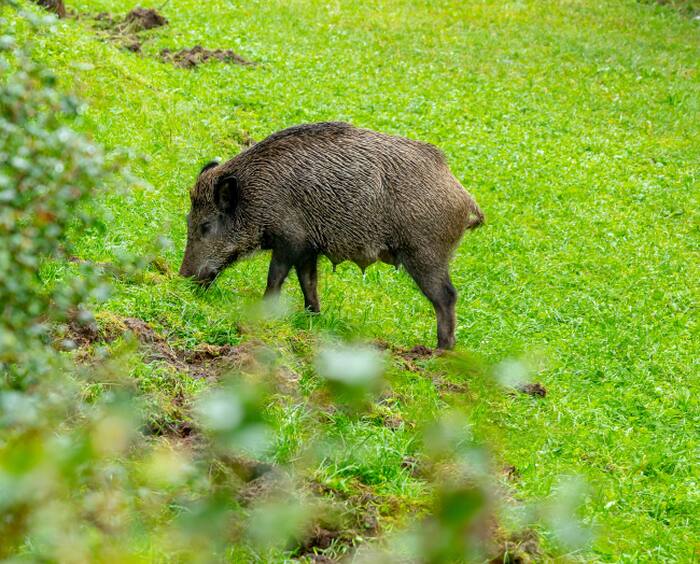
Sugar Land has launched a feral hog mitigation pilot program aimed at protecting parks, public spaces and natural resources from damage caused by the invasive animals.
Feral hogs are a non-native species found throughout Texas. They root through soil in search of food, leaving behind disturbed ground, damaged vegetation and wallows — muddy depressions created when hogs roll in wet soil. Their activity can affect lawns, landscaped areas, parks and natural habitats across the city.
Sugar Land’s river corridors, wooded areas and connected open spaces give hogs easy access to food and shelter, and allow them to move freely between properties. A sighting in one location may be part of a larger movement pattern, which is why the city is taking a coordinated, data-driven approach before expanding management efforts.
The program begins with a 90-day assessment period running Oct. 1 through Dec. 30. During that time, city staff will document feral hog activity and damage, identify priority areas and gather the information needed to guide future management decisions. The current phase focuses on data collection and community education.
Staff will pull from multiple sources during the assessment, including:
Resident awareness and reporting are central to the program’s success. Reliable, firsthand information helps the city direct resources where they are most needed and coordinate with homeowners associations, levee improvement districts and other property owners. There are several ways to report a sighting or damage:
When reporting, residents should include as much of the following information as possible:
A photo is not required to submit a report. Online and email submissions can be made at any time; after-hours reports are processed the next business day.
Important: Reporting documents activity and helps the city evaluate next steps. It does not guarantee immediate trapping or removal.
For immediate public safety concerns, call 281-275-2020. For life-threatening emergencies, call 911. The 311 system is for non-emergency concerns only.
At the end of the assessment period, city staff will evaluate where activity is recurring, the extent and location of damage, potential risks to people and public spaces, and the feasibility and cost of management options.
Based on those findings, recommendations may include:
The end of the assessment does not automatically trigger trapping at every reported location. Any work on private or partner-owned property requires coordination and appropriate authorization.
The city will post a summary of findings and next steps on its website once the assessment is complete.
While the assessment is underway, there are steps residents can take to discourage hog activity on and around their property:
Keep your distance. Do not feed, approach, chase or attempt to capture feral hogs.
Keep pets away from hogs and suspected activity areas.
Manage water sources. Make sure irrigation and rainwater drain properly and do not leave large puddles suitable for wallowing.
Treat your lawn for grub worms, a favorite food source for feral hogs. This may help prevent damage from hogs and other wildlife.
Use deterrents such as motion-activated security lights and sprinklers.
Secure food sources. Store garbage, pet food and other attractants safely. Clean up spilled birdseed, fallen fruit and acorns where practical.
Coordinate with your HOA if activity occurs on private property or in neighborhood common areas.
Reducing attractants may help discourage hog activity, but it will not eliminate every food source or prevent all movement. Persistent problems may require a coordinated management approach.


